

Vacuum pumps are indispensable tools used to create negative pressure environments across diverse fields, from industrial packaging and laboratory filtration to medical suction and micro-automation. While their utility is clear, every vacuum pump, particularly the smaller, dry-running models common in embedded systems, comes with inherent disadvantages and limitations. Understanding these drawbacks is crucial for system designers and end-users to ensure optimal performance and longevity.
I. Overview of Vacuum Pumps and Their Inherent Trade-offs
A vacuum pump works by removing gas molecules from a sealed volume to reduce the pressure. The disadvantages often stem from the trade-off between the desired vacuum level and the pump's complexity, size, and maintenance requirements.
1.1 Types of Vacuum Pumps
The discussion of disadvantages often depends on the pump type:
Dry Vacuum Pumps (e.g., Diaphragm, Piston): These use no sealing fluid, offering a clean vacuum but typically limited to rough or low vacuum levels.
Wet Vacuum Pumps (e.g., Rotary Vane): These use oil or water for sealing and lubrication, achieving higher vacuum levels but introducing contamination and maintenance issues.
II. The Four Primary Disadvantages of Vacuum Pumps
Focusing on the micro and small-scale pumps (often dry-running) used in precision applications, four main disadvantages frequently arise:
2.1 Noise and Vibration Issues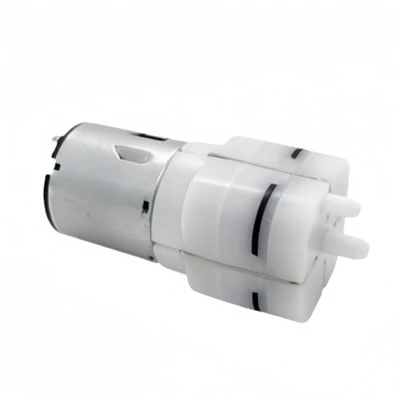
The Disadvantage: Vacuum pumps, especially those using reciprocating motion (diaphragm or piston), generate mechanical noise and vibration due to the rapid movement of internal components and the pulsing nature of gas compression.
Impact: In noise-sensitive environments like medical clinics, laboratories, or smart home devices, excessive noise is a major limitation. The vibration can also affect the accuracy of nearby sensors or sensitive electronic components within the host device.
2.2 Maintenance Requirements and Lifespan Limitations
The Disadvantage: All mechanical pumps have wear parts, leading to inevitable maintenance and limited operational lifespan.
Wet Pumps: Require regular oil changes, which is messy, time-consuming, and introduces the risk of oil vapor contamination.
Dry Pumps (Micro-scale): While cleaner, their lifespan is limited by the fatigue of flexible components (diaphragms) and valves. As these parts wear, the pump's sealing capability degrades, causing a rapid decline in the achievable vacuum level.
2.3 Limitation on Ultimate Vacuum Level
The Disadvantage: Most micro and small dry vacuum pumps cannot achieve high vacuum (HV) or ultra-high vacuum (UHV) levels.
Reason: The achievable vacuum is fundamentally limited by the pump's design, material properties, and internal leakage rate. Dry pumps, due to their reliance on mechanical seals and valves, typically bottom out in the rough or low vacuum range (e.g., 100 mbar to 1 mbar). Applications requiring deeper vacuum must resort to more complex, expensive, and larger multi-stage or turbo pumps.
2.4 Contamination and Media Compatibility Risks
The Disadvantage: The gas being pumped can damage the pump or, conversely, the pump can contaminate the gas.
Corrosive Media: Pumping corrosive gases, water vapor, or solvents can quickly degrade internal components, especially the diaphragm material and valve seats.
Contamination Risk: In wet pumps, oil back-streaming can contaminate the process chamber. In dry pumps, particulate matter drawn into the pump can damage the delicate valves and seals, leading to immediate performance loss.
III. Mitigating Disadvantages: Solutions and Selection Criteria
The key to successful vacuum application lies in selecting a pump that minimizes these inherent disadvantages for the specific use case.
3.1 Addressing Noise and Vibration
Solution: Prioritize pumps engineered with advanced motor technology and anti-vibration features.
BLDC Motors: Pumps utilizing Brushless DC (BLDC) motors offer smoother operation and significantly lower acoustic profiles than traditional brushed motors.
Acoustic Isolation: Look for pumps with integrated dampening systems and precise component balancing.
3.2 Enhancing Lifespan and Reliability
Solution: Focus on material quality and design for endurance.
High-End Materials: Choose pumps with diaphragms and valves made from high-durability, chemically inert materials (e.g., specific PTFE or EPDM compounds) that resist fatigue and chemical attack.
MTBF Data: Demand reliable Mean Time Between Failures (MTBF) data from the manufacturer to assess long-term reliability.
3.3 PinMotor: Overcoming Micro-Vacuum Drawbacks
PinMotor specializes in micro-pump and valve solutions, focusing on overcoming the common drawbacks of noise, short lifespan, and poor air tightness in the dry micro-vacuum sector.
Precision Manufacturing: Our commitment to high-precision machining and strict ISO 9001 quality control ensures superior air tightness. This minimizes internal leakage, allowing our micro-pumps to achieve the best possible ultimate vacuum for their size and type.
Low-Noise Optimization: PinMotor's pumps are designed with low-noise operation as a core requirement, making them the ideal choice for integration into sensitive medical and laboratory equipment where quiet operation is non-negotiable.
Reliability Proven in Critical Fields: Our products are widely used in high-reliability applications like medical diagnostics and precision automation, proving their ability to maintain performance and stability over extended operational periods, effectively mitigating the typical lifespan disadvantage.
By choosing a precisely engineered micro-pump from PinMotor, you select a component that has been specifically designed to minimize the inherent disadvantages of dry vacuum technology, delivering clean, quiet, and reliable performance.